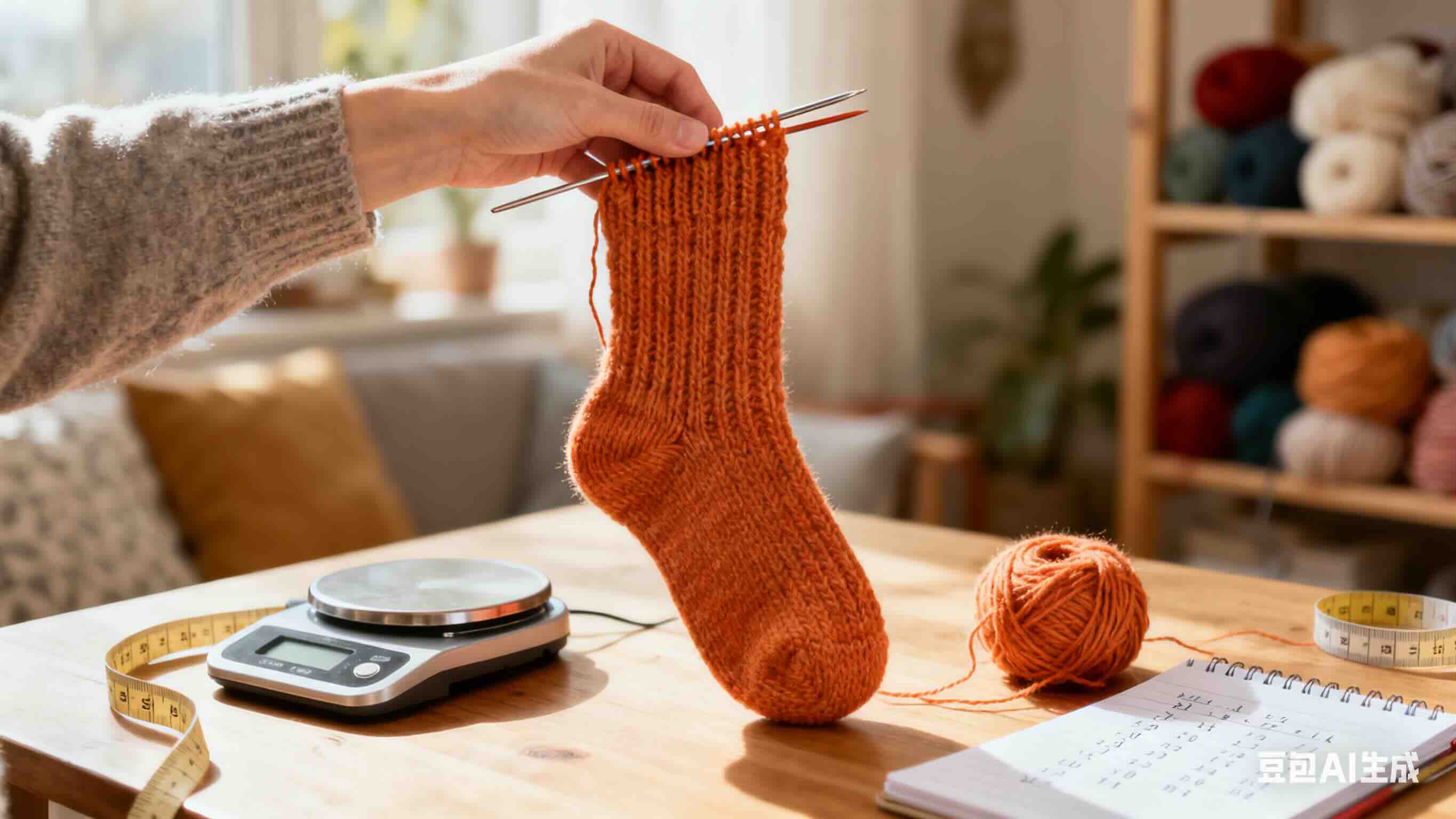
We’ve all been there. You’re on the final row of a project, heart pounding, looking at a rapidly dwindling ball of yarn. This is the high-stakes game of "Yarn Chicken," and more often than not, the yarn wins, leaving you with a frustratingly incomplete project.
My name is Sarah, and after more than two decades of designing and knitting, I’ve lost my fair share of Yarn Chicken. But I’m here to tell you that those days are over. Accurately estimating how much yarn you need isn’t a mystery; it’s a practical skill. In this guide, I’m going to teach you the methods I use every day to calculate yarn needs with precision, ensuring a future of stress-free knitting.
Why You Can't Always Trust the Pattern's Estimate
A pattern’s yardage recommendation is an excellent starting point, but it's based on the designer’s exact yarn, gauge, and personal tension. If any of your variables are different, your yarn usage will be, too. Several factors can dramatically increase the amount of yarn you use:
- Your Gauge is Looser: Each stitch is larger and consumes more yarn.
- Pattern Modifications: Adding length to a body or sleeves requires more yarn.
- "Thirsty" Stitch Patterns: Textured stitches like garter, moss stitch, or especially cables, create a denser fabric and use substantially more yarn than plain stockinette.
Two Reliable Methods for Estimating Yardage
Here are two trusted methods for figuring out exactly how much yarn you need.
| Method | Best For | Key Action |
|---|---|---|
| 1. The Swatch-Based Calculation | Maximum accuracy, especially for modified or self-designed projects. | Weighing a precise, blocked swatch and calculating the area. |
| 2. Standard Yardage Charts | Quick and reliable estimates for common projects like hats, socks, and standard-sized sweaters. | Cross-referencing your yarn weight and project type on a chart. |
Method 1: The Swatch-Based Calculation (The Gold Standard)
This method uses your own gauge swatch and a simple kitchen scale to give you a precise, personalized estimate.
- Create a Precise, Blocked Swatch: Knit a swatch that is larger than 4x4 inches (I recommend 6x6). Wash and block it exactly as you will the final garment.
- Weigh Your Swatch: Once dry, use a sensitive digital kitchen scale. Let’s say your swatch weighs 14 grams.
- Measure the Area: Measure the swatch's precise dimensions. It might be 6.25" x 6.5". Calculate the area: 6.25 * 6.5 = 40.625 square inches.
- Calculate the Project Area: Approximate your project as a collection of rectangles (Front + Back + Sleeves). For a medium sweater, this might be roughly 1440 square inches.
- Do the Final Math: First, find the weight per square inch (14g / 40.625 sq in = 0.344g/sq in). Then, calculate the total weight needed (0.344g/sq in * 1440 sq in = 495g).
Now you know you need approximately 500g of yarn. For those who prefer a digital approach, our powerful Yarn Amount Estimator uses similar principles to provide reliable figures.
Method 2: Using Standard Yardage Charts (The Quick & Reliable Method)
You don’t always need that level of precision. Standard charts are an excellent, fast way to get a reliable estimate. The most important factor is yarn weight. Before using a chart, know your yarn’s weight category by checking our Yarn Weight Chart if you're unsure.
Here is a simplified chart for quick reference:
- Socks (Adult): 350-450 yards of Fingering weight.
- Beanie/Hat (Adult): 200-250 yards of Worsted weight.
- Sweater (Adult Medium): 1100-1400 yards of Worsted weight; 1800-2200 yards of DK weight; 2400-2800 yards of Fingering weight.
My Golden Rule: Always Add a Buffer
Even with the best calculations, surprises happen. This is why I have one unbreakable rule: Always add a 10-15% buffer. If your calculation says you need 1200 yards, buy 1320. Why?
- Dye Lot Differences: If you run out and have to buy more, the new skein might be from a different dye lot and the color could be noticeably different.
- Mistakes Happen: You might have to rip back a section, which can stress the yarn.
- Creative Opportunities: That extra yarn could become a matching hat or be used to add more length.
Remember: leftover yarn is a bonus for your stash. Running out of yarn is a project-ending catastrophe. If you're substituting yarn, always focus on the total yardage required, not the skein weight, a topic we cover in our Yarn Substitution Guide.
Final Thoughts: Knit with Confidence
Estimating your yarn needs is a skill that grows with every project. By taking a few extra minutes to swatch, weigh, and calculate, you are giving yourself the gift of peace of mind. So, the next time you cast on, make a promise to yourself: you will not play yarn chicken. Buy the extra skein. You will never, ever regret it.