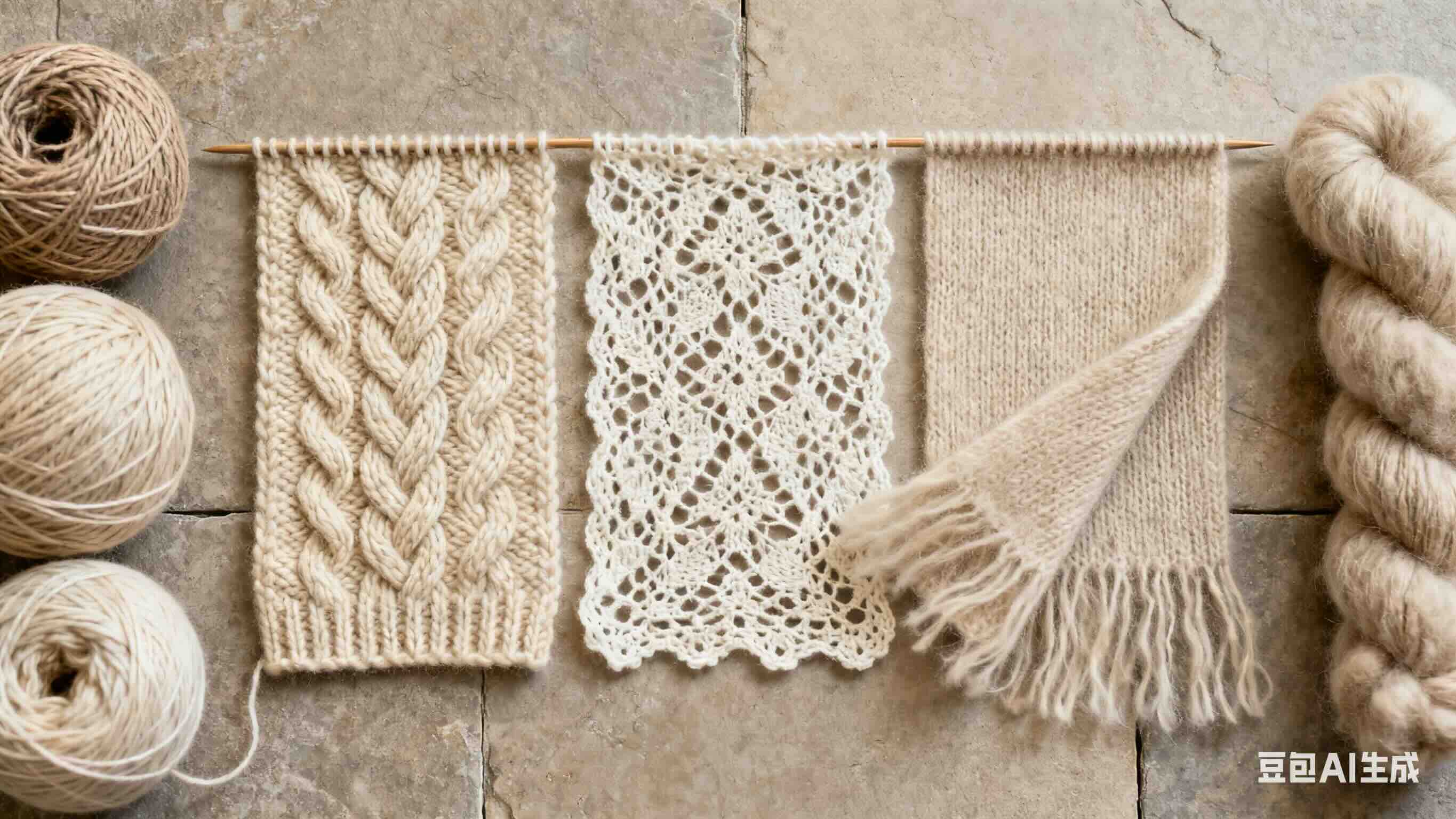
Imagine a chef preparing three different dishes. For a hearty winter stew, they choose robust root vegetables. For a light summer salad, crisp greens. For a decadent dessert, rich cream. Each ingredient is chosen for its unique properties. In the world of knitting, fiber is our primary ingredient, and the choice is just as critical. Selecting the right fiber is the single most important decision you’ll make after you’ve chosen your pattern.
Over my two decades as a yarn professional and designer, I’ve seen countless knitters fall into the trap of thinking that yarn is just “string.” But the fiber content is the soul of your yarn. It dictates how the finished fabric will feel, drape, how warm it will be, and how it will wear over time. This guide will take a deep dive into the science and personality of three of the most popular fibers—wool, cotton, and alpaca—so you can learn to choose your ingredients with intention and confidence.
Wool vs. Cotton vs. Alpaca: A Quick Comparison
Before we dive deep, here’s a quick cheat sheet to the core strengths of each fiber.
| Feature | Wool (The All-Rounder) | Cotton (The Breathable Staple) | Alpaca (The Luxury Specialist) |
|---|---|---|---|
| Elasticity (Memory) | Excellent. Springs back into shape. | Poor. Can stretch out over time. | Very Poor. Known for "growing." |
| Drape (Fluidity) | Moderate. More structural. | Stiff to moderate. Softens with washing. | Excellent. Heavy and liquid-like. |
| Warmth | Very Warm. Excellent insulator. | Cool. Breathable and heat-conductive. | Exceptionally Warm. Warmer than wool. |
| Best For | Cables, colorwork, socks, structured sweaters. | Summer tops, dishcloths, market bags, baby items. | Shawls, scarves, drapey cardigans, luxury accessories. |
A Deep Dive into Wool: The Knitter's Workhorse
Wool is the quintessential knitting fiber. When you think of a classic hand-knit sweater, you’re probably picturing wool. The magic lies in its physical structure. Each fiber has a natural, spring-like crimp, which gives wool its signature elasticity and memory. When you stretch a wool fabric, the fibers want to spring back to their original shape. This property makes it forgiving to work with and reliable to wear.
Best Use Cases for Wool:
- Cabled Sweaters: Wool’s natural bounce makes cables and textured stitches pop with beautiful definition.
- Colorwork (Fair Isle): The "grabby" nature of non-superwash wool helps it cling together, making it easier to manage floats.
- Socks, Hats & Mittens: Wool is naturally moisture-wicking and its elasticity creates a snug, comfortable fit.
Heads Up: The main complaint about wool is the “itch factor.” For next-to-skin softness, I always recommend choosing a fine wool like Merino. Also, be mindful of care—unless it’s superwash, wool will felt if machine washed.
A Deep Dive into Cotton: The Breathable Staple
Cotton is the king of plant fibers, offering a completely different knitting experience. Unlike wool’s kinky structure, a cotton fiber is a smooth, straight cellulose tube with virtually no elasticity. This is its defining characteristic. A cotton fabric will not spring back into shape the way wool does. It is, however, very strong, highly absorbent, and feels cool to the touch.
Best Use Cases for Cotton:
- Summer Garments: Its breathability makes it the top choice for summer tops, tanks, and lightweight cardigans.
- Home Goods: Cotton’s strength and absorbency are perfect for functional items like dishcloths and market bags.
- Crisp Stitch Definition: The smooth nature of cotton yarn creates incredible stitch definition, ideal for intricate lace patterns.
Heads Up: The lack of elasticity can be tough on a knitter’s hands. Cotton is also heavy; a large cotton sweater will be significantly heavier than a wool one. Because it has no memory, cotton garments can stretch out with wear.
A Deep Dive into Alpaca: The Luxury Specialist
If wool is the reliable workhorse and cotton is the practical staple, then alpaca is the decadent specialist. Its properties are dramatically different. Alpaca fibers are partially hollow, making them incredibly lightweight yet exceptionally warm—even warmer than wool. Structurally, they are more like silk: long, smooth, and with very little crimp. This lack of crimp gives it its signature, heavy, liquid-like drape.
Best Use Cases for Alpaca:
- Shawls, Wraps, and Scarves: For accessories where you want movement and flow, nothing beats alpaca.
- Luxury Garments (with caution): A drapey cardigan in alpaca can feel incredibly luxurious. However, it’s often best used in a blend with wool, which lends some much-needed memory and structural support.
Heads Up: The number one issue with 100% alpaca is that it “grows.” A sweater can stretch significantly with wear. It is not the right choice for any project that requires structure, like a cabled sweater, as the stitches will soften and lose definition.
Final Thoughts: Choose with Intention
Wool, cotton, and alpaca are all wonderful fibers, but they are not interchangeable. Each brings its own unique personality to your needles. By understanding their core strengths and weaknesses, you move beyond simply picking a pretty color and begin to knit with intention. This understanding is the absolute foundation of making smart choices, especially when it comes to yarn substitution.
This knowledge empowers you to become the architect of your fabric, making informed decisions that ensure your finished project will not only be beautiful, but will be a joy to wear and use for years to come.